
Proper Hand Positioning for Handgun Use

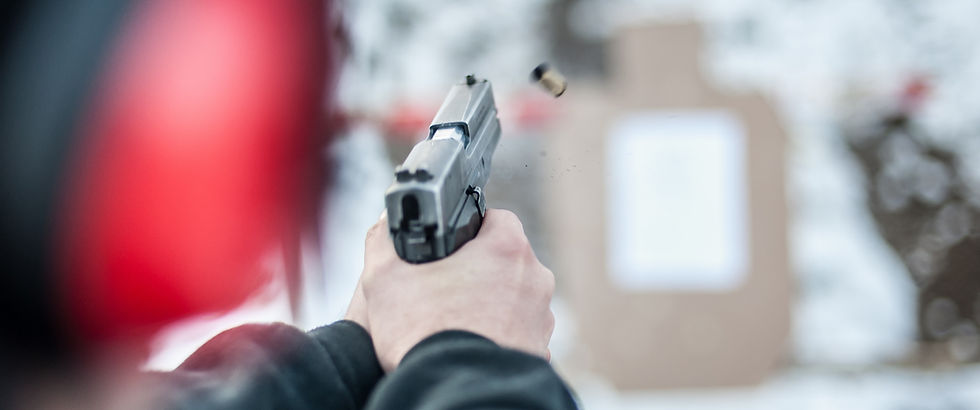
Have you ever wondered why your rounds are consistently hitting to the left, right, high, or low? Do you possibly have unexplained jams from your semi auto and are uncertain why? The solution to fixing these problems may be easier than you think. It all starts with fundamentals.
When it comes to handgun accuracy, recoil control, and safe firearm handling, few fundamentals matter more than proper hand positioning. A solid grip creates stability, improves reaction time, and helps shooters maintain control during rapid or defensive fire situations. Whether you are brand new to firearms or have years of experience, refining your grip can dramatically improve performance.
Why Proper Grip Matters
Improper hand placement is one of the leading causes of poor accuracy, slow follow-up shots, and loss of control under stress. A proper grip helps you:
Reduce muzzle rise during recoil
Improve sight alignment consistency
Increase shooting speed and accuracy
Maintain control during malfunction clearing and movement
Enhance overall firearm safety
In defensive situations, the ability to quickly regain sight picture and maintain control can make a critical difference.
Step 1: Establish a High Grip
Your dominant hand should ride as high as possible on the backstrap of the handgun without interfering with the slide movement. The web of your hand — the area between your thumb and index finger — should be firmly seated high under the tang or beavertail (rear portion of the frame).
A high solid grip helps direct recoil straight back into the arm rather than allowing the muzzle to excessively rise upward.
Your trigger finger should rest along the frame above the trigger guard until ready to fire. There are a few different schools of thought on this but keeping your finger off of the trigger can prevent accidental discharges if the shooter flinches. Accidental discharges or an AD is dangerous. It can cause unwarranted physical injury and property damage, as well as create liability.
Example of a Common Mistake:
Leaving a gap between the web of the hand and the backstrap reduces recoil control and creates instability. This can also cause semi auto handguns to jam. Semi autos require a solid grip to properly eject empty casings.
Get in the habit of seating the web of your hand as high as possible on the backstrap, directly under the tang or beavertail.
Step 2: Support Hand Placement
Wrap the forefingers of your support hand over the forefingers of your dominant hand and squeeze your support palm inward to meet the palm of your dominant hand.
Imagine you are trying to crush a ball with your hands. You wouldn’t put the ball in your hands with your palms together and apply pressure with your fingers. It wouldn’t make any sense. Solid pressure and strength is applied by squeezing your palms together not by squeezing your fingers together.
Despite this fact, many instructors suggest wrapping your hands together from back (palms) to front (fingers). Don’t do this!
Both thumbs should point forward along the frame with the thumb of the dominant hand resting on the thumb of the support hand. This modern thumbs-forward grip helps create leverage and control during recoil management.
Your support hand should apply firm pressure inward and slightly backward while the firing hand maintains consistent forward pressure.
Ensure that no part of your hands are placed above the beavertail, as this will prevent the slide from biting you when you fire. If you have ever been bitten by a slide you will know what I mean. If you haven’t – you don’t want to experience it!
Step 3: Finger Placement on the Trigger
Your trigger finger should contact the trigger with the pad of the finger, not the joint. Proper placement allows for a smooth rearward press without pushing the handgun left or right.
Trigger control and grip work together. Too much finger on the trigger often causes shots to pull inward, while too little finger can push shots outward.
Step 4: Grip Pressure
Think of your grip pressure like a firm handshake. Too loose and the firearm shifts during recoil. Too tight and excessive muscle tension can cause shaking and fatigue.
A balanced grip allows:
Better trigger control
Faster follow-up shots
Reduced shooter fatigue
Improved accuracy consistency
Reduced chance of a jam
Consider applying slightly more pressure with the support hand than the firing hand.
Wrist Positioning
Both wrists should remain locked and slightly forward. Weak or bent wrists reduce recoil control and can even contribute to firearm malfunctions with semi auto handguns.
Aggressive forward body posture combined with locked wrists can create a stable shooting platform.
One-Handed Shooting Considerations
While two-handed shooting is preferred whenever possible, shooters should also practice dominant-hand-only and support-hand-only shooting techniques. During emergencies, injuries, or defensive encounters, one-handed shooting may become necessary.
Key points include:
Maintain a high grip
Lock the wrist
Focus heavily on trigger control
Expect increased recoil movement
Dry Fire Practice
One of the best ways to improve hand positioning is through safe dry fire practice. Repeatedly establishing a proper grip from the holster helps build consistency and muscle memory.
Before any dry fire training:
Remove all live ammunition from the room
Double-check that the firearm is unloaded
Follow all firearm safety rules
Remember - consistency and muscle memory are developed through repetition.
Final Thoughts
The next time you head out to the range or engage in dry fire practice, see how you initially grip your firearm and consider implementing our suggested techniques.
Proper hand positioning is a foundational skill that affects every aspect of handgun shooting. Even experienced shooters can benefit from regularly evaluating and refining their grip technique. Small adjustments can produce major improvements in control, speed, and accuracy.
At E1 Tactical Solutions, we teach students how to build strong fundamentals through practical instruction and real-world application. Developing a proper grip is one of the fastest ways to improve confidence and effectiveness with a handgun.
Training with purpose creates safer, more capable shooters.


Comments